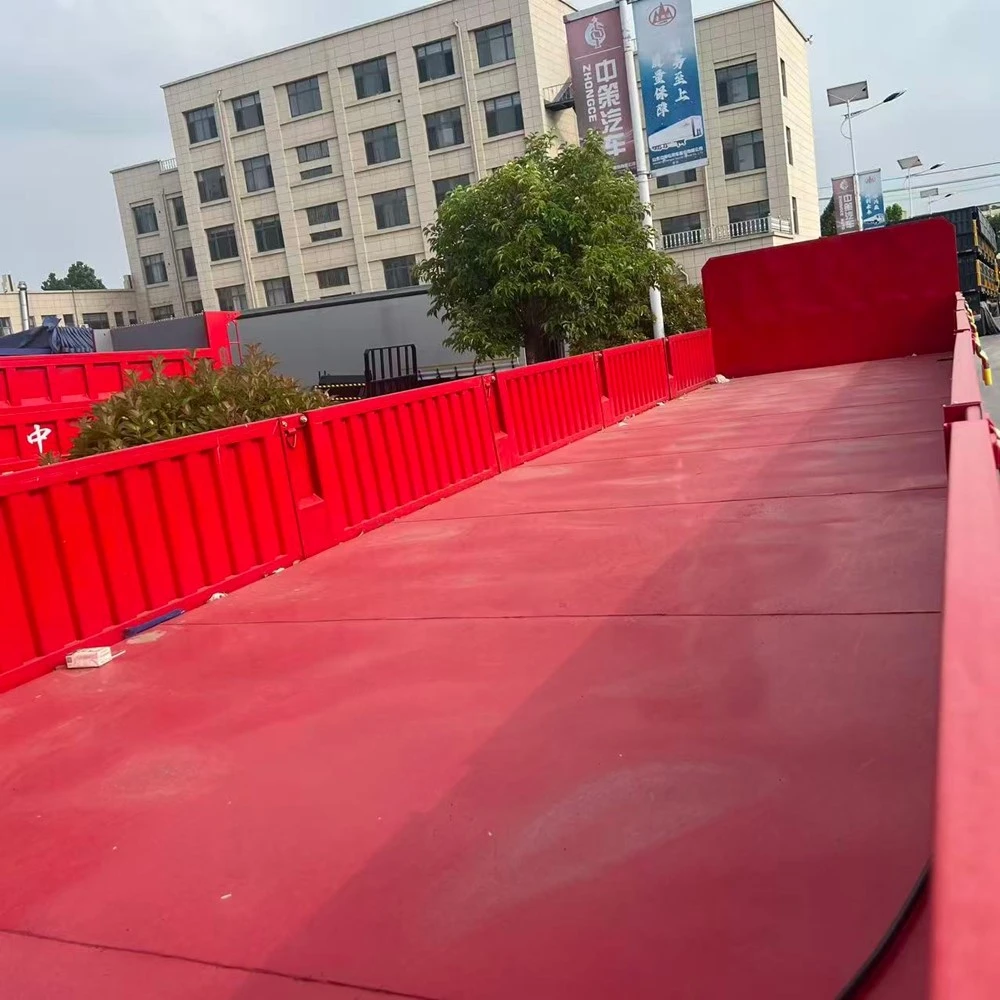
The hydraulic system of a dump semi-trailer consists primarily of key components such as the power take-off (PTO) unit (mounted on the transmission), hydraulic pump, lift valve, pneumatic control valve, limit valve, hydraulic cylinder, hydraulic oil tank, and high/low-pressure hoses; these components work in concert to execute the lifting operation.
The operating principle is as follows: once the engine is running, the transmission and PTO drive the hydraulic pump, which pressurizes hydraulic fluid from the tank. This high-pressure fluid is directed via the distribution valve (lift valve) to the hydraulic lift cylinder, extending the piston rod to tip the cargo bed. Upon completion of unloading, the control system allows the fluid to return, causing the piston rod to retract and the cargo bed to return to its original position.
Operational procedures require disengaging the rear door locking mechanism, engaging the PTO, and shifting into a low gear before setting the pneumatic control valve handle to the "raise" position; for lowering, the PTO is disengaged, and the control valve handle is slowly moved to the "lower" position. Maintenance requirements include: maintaining engine speed at approximately 1,000 rpm during the new vehicle break-in period and below 1,500 rpm thereafter; replacing hydraulic fluid and cleaning the tank after approximately 300 lifting cycles; replacing high-pressure hoses every two years; checking hydraulic fluid condition weekly; replacing return-line and air filter elements every six months; and applying grease to the cylinder mounting bracket every 120 lifting cycles or every 15 days. During lifting, ensure the load is balanced and the unloading site is level and firm; the hydraulic cylinder should not remain exposed for more than two hours while the vehicle is in the raised position, and the cylinder must not be used as a permanent structural support for the cargo bed.