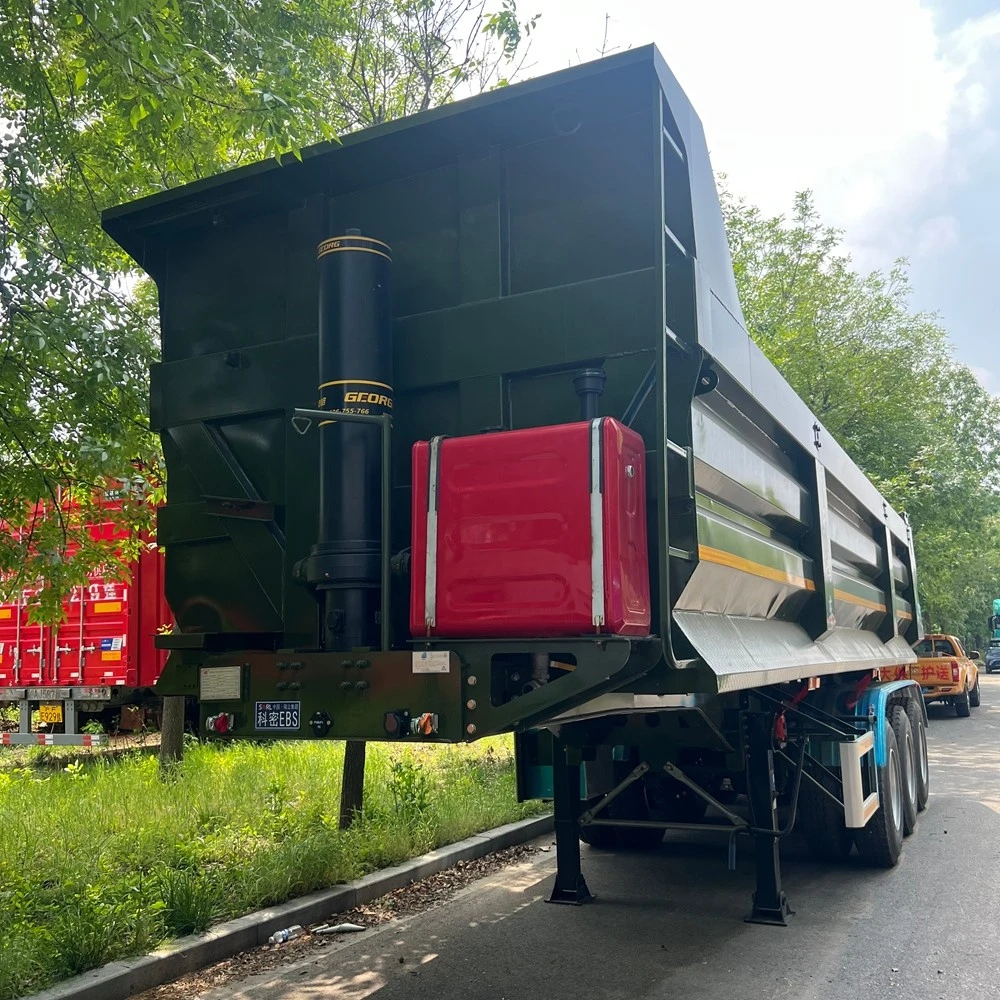
In 2016, the *Regulations on the Administration of Over-limit Transport Vehicles on Highways*-known as the "921 New Policy"-were officially implemented, launching a nationwide crackdown on vehicle overloading and exceeding dimensional limits. This laid the groundwork for the subsequent transformation of the dump semi-trailer market toward standardization and lightweight design.
Around 2017, the legal status of flatbed dump semi-trailers drew widespread industry attention and sparked debate due to inconsistent regional standards; consequently, the Ministry of Industry and Information Technology suspended the uploading of compliance certificates for this vehicle type. In 2019, the state further refined regulations concerning semi-trailers, steering the industry toward a healthier and more mature market.
Entering the 2020s, policies addressing vehicle overloading continued to intensify. New regulations set to take effect in 2025 imposed strict limits on gross vehicle weight-such as a 36-ton limit for four-axle vehicles and a 49-ton limit for six-axle vehicles-thereby driving the design of lightweight models. Lightweight models with a curb weight as low as 6.3 tons emerged on the market, representing a significant weight reduction compared to traditional models.
During this same period, industry technology also advanced; for instance, in July 2025, Hunan Tiehua Jingfu Automotive Group Co., Ltd. filed a patent for an "intelligent welding system for multi-functional dump semi-trailers."