
Hey there! If you’re in the market for moving big, heavy loads—like construction equipment, industrial machinery, or prefab structures—you’ve probably wondered: can a low-bed semi-trailer work for your exact needs? As someone who’s been supplying low-bed semi-trailers for over a decade, I get this question all the time. And here’s the short answer: yeah, you 100% can customize these trailers. No one-size-fits-all works when you’re hauling gear that’s too tall, too heavy, or just plain weird-shaped to fit a standard trailer. Let me break down why customization matters, what we can tweak, and how it actually works (no jargon, promise).
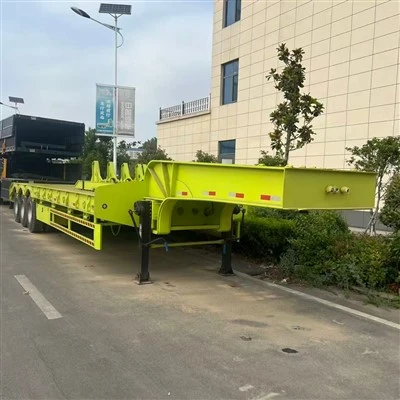
First, let’s get one thing straight: low-bed semi-trailers aren’t your average box trailer. They’re built for heavy hauling, with that low bed (hence the name) that lets you move tall loads without scraping under bridges or overpasses. But not every heavy load is the same. A small excavator might fit a basic trailer, but a 150-ton industrial press? That needs a different setup. A wide prefab home section? You need extra space. That’s where customization comes in—and it’s not just a “nice to have” for most of our customers.
Let’s start with the basics of what we can customize, because that’s probably what you’re curious about. First up: axle configurations. Axles are super important for weight distribution—if you overload a single axle, you’re looking at blowouts, fines, or even accidents. We have standard models, obviously: the 3-Axle Low-Bed Semi-Trailer is perfect for lighter loads, like a mini crane or a skid steer, since it’s designed to carry up to, say, 40 tons. But if you’re moving something way heavier, like a bulldozer or a massive generator, you’ll want more axles. That’s where our 5-Axle Heavy-Duty Low-Bed Semi-Trailer comes in—handles up to 80 tons, and we can even go beyond that for super heavy loads. Wait, we don’t stop at 5, either; we can do 6 or 7 axles if you need to spread weight even more to avoid route restrictions. That’s a big one, by the way—some states or countries have strict axle weight limits, so customizing axles lets you hit those limits without leaving load on the table.
Next, deck modifications. The deck is the flat part where your load sits, and that’s totally customizable. For example, if your load has really tall feet or uneven bases, we can lower the deck even more—sometimes called a “lowboy” deck, but it’s just a custom deck height. Standard decks are usually around 20 inches off the ground, but we can drop that to 16 or even 12 inches if you’re hauling something like a large turbine that’s just too tall to fit otherwise. We can also widen the deck—standard widths are 8.5 feet, but we can go up to 10 or 12 feet for extra-wide loads, like construction machinery with outriggers that stick out. Oh, and we can add ramps! Not just the basic built-in ones, either: if your load has tracks (like an excavator) we can add heavy-duty track ramps, or if you’re driving a vehicle up, we can make a hydraulically operated gooseneck ramp that’s easy to extend or retract. Some customers even ask for removable deck sections—so if they’re hauling a mix of a small load and a big, long one, they can take out a middle section to make extra space. That’s a game-changer for jobs where you don’t have time for two trips.
Then there’s the gooseneck. The gooseneck is the part that connects the trailer to the truck, right? Standard goosenecks are fixed, but we can make hydraulic goosenecks that adjust height. That’s great if you’re traveling on roads with steep dips or hills—you can raise the gooseneck to avoid scraping, or lower it for better stability when loaded. We can also make the gooseneck extendable, which lets you adjust the length of the trailer. So if you’re hauling a 40-foot long backhoe, you can extend the gooseneck to stretch the total length, making it easier to balance the load. No more overhangs that get you flagged by DOT inspectors—we can dial that in exactly to your load.
Wait, what about special features that aren’t on standard models? A lot of our customers need things like toolboxes mounted in specific spots, or extra tie-down points. Standard tie-downs are usually spaced every 2 feet, but if your load has specific lifting points, we can add more tie-downs right where you need them. We’ve also added hydraulic winches for customers who are hauling loads that need to be secured tightly, or even lighting upgrades for off-road routes—like extra LED lights on the sides or back to make sure you’re visible when you’re moving a wide load at night. Oh, and if you’re working in a cold climate, we can add anti-freeze to the hydraulic systems, or even heated decks to prevent ice from forming when you’re loading in winter. Small tweaks, but they make a huge difference for how well the trailer works for your job.
I should mention that customization isn’t just “changing parts”—it’s about making sure the whole trailer works for your specific use case. Let me give you an example: last year, a construction company came to us needing to haul a 70-ton tunnel boring machine (TBM) for a project out in the desert. They tried a standard 5-axle trailer, but the TBM was too long and the deck was a bit too narrow to fit without the outriggers sticking out. We swapped in a 6-axle setup to spread the weight, widened the deck by a foot, and added an extendable gooseneck to stretch the total length by 5 feet. We also added heavy-duty tie-downs specifically positioned around the TBM’s lifting lugs, so they didn’t have to use extra straps. That trailer worked perfectly for their trip—they didn’t have any issues with DOT checks, and they didn’t need a second trailer for extra parts. Without the customization, that trip would’ve been a nightmare—fines, delays, maybe even a damaged load.
Another example: a local agricultural customer needed to haul a combine harvester, which is tall and has a wide header. Their standard 3-axle trailer was too short, and the deck height was a problem because the header was 14 feet tall—over the 13.5 foot limit for most roads. We lowered the deck by 3 inches, swapped in a 4-axle setup to keep weight down (they didn’t need the heavy 5-axle), and added a hinged header mount so they could fold the header down slightly for travel. That saved them thousands of dollars in extra costs, because they didn’t have to use a specialized oversize load trailer.
Now, I know what some of you are thinking: “Customization must cost a fortune, right?” Yeah, there’s a small premium for custom parts, but it’s usually way less than the alternative. If you try to use a standard trailer for a load it wasn’t made for, you might end up with damage to the trailer, fines from DOT, or even accidents. Plus, if you’re a regular hauler, having a trailer tailored to your most common loads means you save time on every trip—no adjusting ramps, no moving tie-downs, no worrying about weight limits. We work with almost all budgets, too; even small tweaks like extra tie-downs or a lower deck don’t add that much to the total cost. The big changes (like extra axles or an extendable gooseneck) are a bit more, but we can give you a detailed breakdown so you know exactly what you’re paying for.
Wait, also—let’s talk about lead times. A lot of customers worry that custom trailers take forever to build, but here’s the thing: we’ve streamlined our custom process so we can turn around most orders in 4-6 weeks. That’s not much longer than a standard trailer, honestly, because we have all the parts on hand to make tweaks quickly. We start with a consultation, where you tell us exactly what you’re hauling, the routes you’re taking, and any specific requirements you have. Then our team of engineers draws up a custom design, checks it against weight limits and safety standards, and builds the trailer with high-quality materials (we use steel that’s tested for heavy loads, so it doesn’t flex or break). We also do a full inspection before delivery, so you know it’s road-ready.
Is there anything we can’t customize? Let’s be real. We can’t turn a trailer into something that can carry 200 tons on 2 axles—weight limits are a thing, and safety is our top priority. We also can’t make a trailer that’s wider than what’s allowed on public roads (usually 8.5 feet, unless you have an oversize load permit), but we can design wide loads that meet those permit requirements. If you have a really weird load—like a custom-built mobile home or a giant wind turbine blade—we can work with you to design a trailer that fits, even if it means a special route plan. We’ve done that before, and our team knows how to handle the logistics of oversize loads.
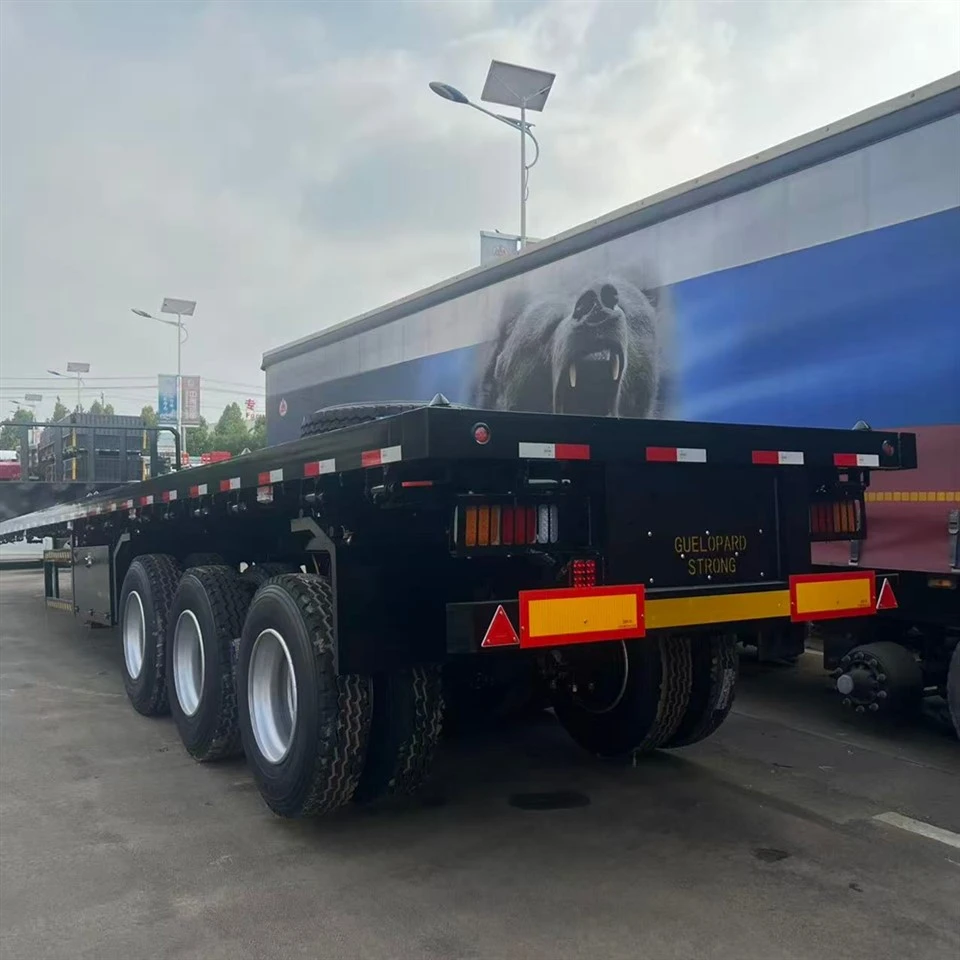
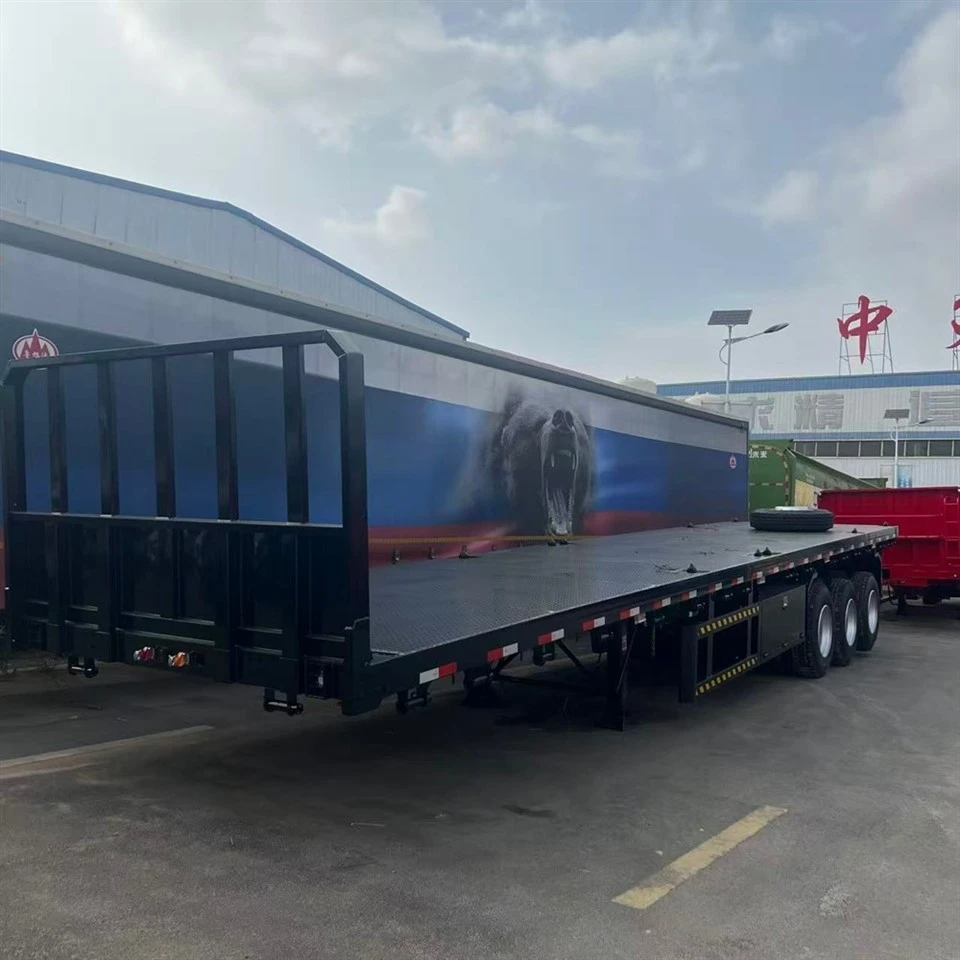
At the end of the day, the whole point of a low-bed semi-trailer is to make heavy hauling easier. If a standard model can’t handle your load, why would you settle? Customization means you get a trailer that fits your job perfectly, saves you time and money, and is safe to use on the road. We’ve seen it too many times: a customer tries to use a standard trailer, runs into problems, and ends up coming back to us to build a custom one. That’s why we focus on making the customization process simple—no confusing jargon, no hidden fees, just a team that listens to what you need.
If you’re thinking about a low-bed semi-trailer and wondering if customization is right for you, reach out to our team. We can walk you through the options, talk about axle configurations, deck modifications, and any other features you need. Whether you’re a small construction company that needs a trailer for a few small jobs, or a large hauler that needs heavy-duty gear for big projects, we can build something that works for you. Don’t waste time with a one-size-fits-all trailer that doesn’t fit your load—let’s make something that does.
References
- Federal Motor Carrier Safety Administration. (2023). Heavy Vehicle Axle Weight Limits & Safety Standards.
- North American Trailer Manufacturers Association. (2022). Custom Low-Bed Trailer Design Guidelines for Oversize Loads.
- International Road Transport Union. (2023). Cross-Border Heavy Haulage Customization Requirements for Low-Bed Trailers.
Contact our team today to discuss your low-bed semi-trailer customization needs and request a tailored quote.