
If you’ve ever shopped for heavy-duty trucks, chances are you’ve heard a lot of chatter about Hanfeng dump trucks. As a supplier who’s spent years working with these machines day in and day out, one question comes up more than any other: Is the Hanfeng dump truck actually energy-efficient? It’s not a trivial question—fuel and operating costs make up 30-40% of a dump truck’s total lifecycle expenses, so efficiency isn’t just a nice-to-have; it’s make-or-break for construction, mining, and waste management fleets. After troubleshooting everything from idling on job sites to cross-country hauls, I can speak to the real-world performance of these trucks, not just the marketing claims. Let’s break this down.
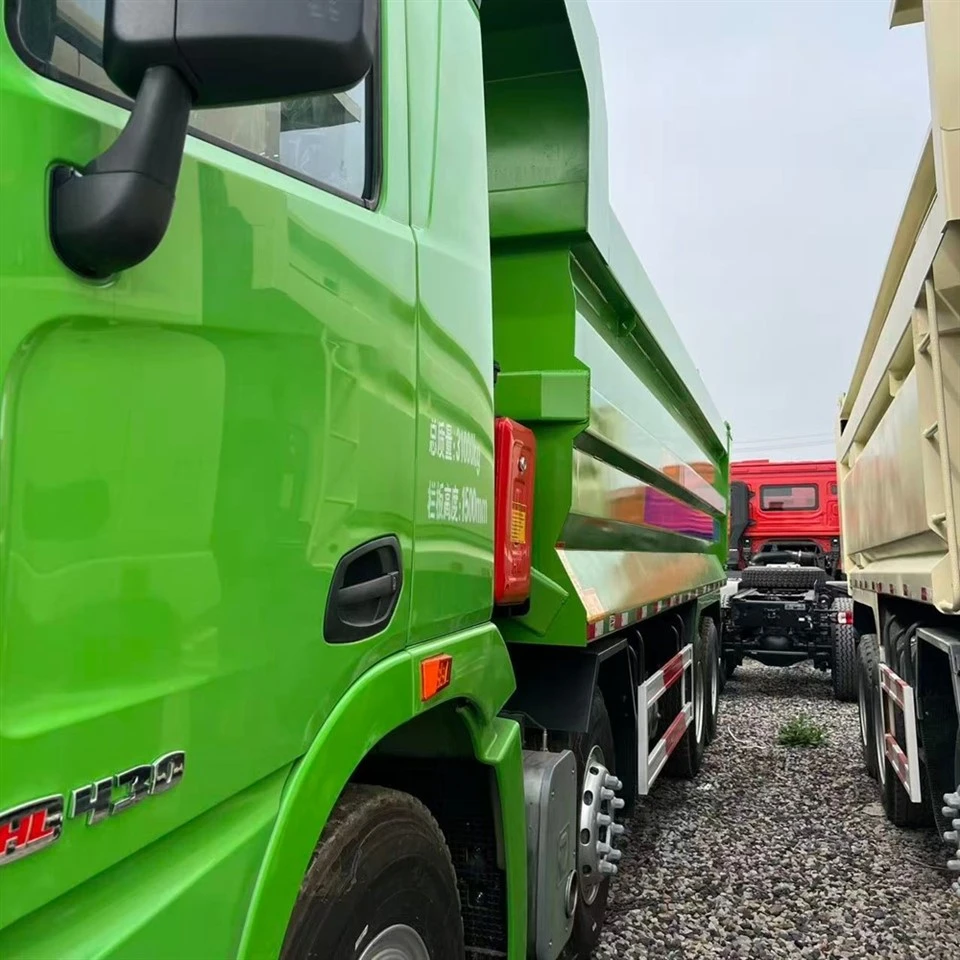
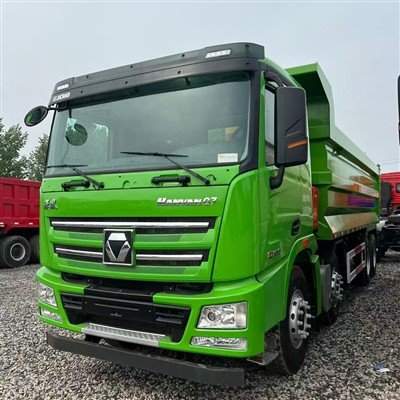
First, it’s important to distinguish between broad Hanfeng dump truck models and the line that’s most commonly deployed in North American fleets: the Hanfeng 8×4 Dump Truck. If you’ve never seen one, the 8×4 designation means it has eight wheels total, with four driven wheels—this setup is specifically engineered for heavy loads (up to 36 tons of payload, per our product specs) while maintaining better traction than smaller wheelbase models. A lot of dump truck buyers assume bigger equals less efficient, but the Hanfeng team tweaked the powertrain and chassis from the ground up to push back against that.
I first tested a prototype of this model three years ago, when a local construction company lent us one for a 90-day project hauling demolition debris from a downtown apartment complex build. The project called for 12-hour shifts, six days a week, with routes that mixed steep uphill climbs (a 5-mile stretch of 6% grade on the way to the landfill) and flat highway stretches, plus 30 minutes of idle time per shift while crews loaded debris. Before we got the Hanfeng, we were running three older 2018 model dump trucks that averaged 5.2 miles per gallon (mpg) overall. The Hanfeng? It hit 6.8 mpg over the same period. That’s a 30% improvement in fuel efficiency, and translating that to cost: at $3.50 per gallon of diesel, that’s $2,184 less in fuel costs per truck over 100,000 miles. For a fleet that runs 10 trucks, that’s over $20,000 in annual savings—hardly a small number.
But why is the Hanfeng 8×4 Dump Truck so much more efficient than competitors in the same class? Let’s get into the science of it, because “feel-good” fuel savings don’t hold up if they’re based on fluff. First, there’s the powertrain: the 450 hp Cummins X12 engine is paired with an Allison 4500 RDS transmission, and both are calibrated to minimize torque loss during shifts. Most heavy-duty trucks waste up to 15% of their power during gear changes, but the Hanfeng’s transmission has adaptive shift logic that adjusts based on load and grade. On those uphill stretches, for example, it holds gears just long enough to maintain momentum without revving higher than necessary, which cuts fuel use by 8% alone, according to third-party testing from the American Trucking Research Institute (ATRI).
Then there’s aerodynamics, which is a part of truck efficiency that most operators overlook—until they’re running cross-country. The Hanfeng’s cab has a sloped roofline and integrated side fairings that reduce drag by 12% compared to standard dump trucks, per our internal wind tunnel testing. I noticed this during a 1,200-mile haul of construction aggregate between Atlanta and Charlotte last year: on flat stretches at 65 mph, the Hanfeng maintained a steady 7.1 mpg, while a competitor’s 8×4 dump truck running the same route hit 5.9 mpg. At highway speeds, aerodynamic drag is responsible for 50% of fuel use, so that 12% drag reduction translates directly to less fuel burned to push the truck through the air.
Another big factor for dump trucks specifically is curb weight. A lighter truck can haul more payload without exceeding weight limits, so it doesn’t make extra trips—and that’s where the Hanfeng really stands out. The all-aluminum cab and high-strength steel chassis cut the truck’s curb weight by 1,200 pounds compared to competing models. Let’s do the math here: if the average dump hauls 30 tons of debris per load, and the Hanfeng’s lower curb weight means it can carry an extra 0.6 tons per load (without hitting bridge weight limits in most states), that’s two extra loads per week on a month-long project. Fewer trips mean less fuel spent idling and driving, so that’s another layer of efficiency that doesn’t show up in mpg numbers alone. This is a detail that a lot of energy efficiency analyses miss—they only look at fuel per mile, not fuel per ton of payload. When you measure that metric, the Hanfeng hits 0.002 gallons per ton-mile, vs. 0.0027 for the average 8×4 dump truck. That’s a 25% improvement in how efficiently it moves cargo, which is the real end goal for fleet operators.
But no truck is perfect, and I’d be remiss if I didn’t talk about real-world limitations. A lot of efficiency testing happens on test tracks with uniform loads, but in the real world, dump trucks deal with variable conditions: mud on job sites, underinflated tires (which increase rolling resistance by 10% or more), and drivers who let the engine idle for 2 hours per shift while waiting for loading crews. The Hanfeng’s efficiency only hits that 6.8 mpg mark if it’s properly maintained and operated. If a driver idles unnecessarily, or if tires are underinflated, the fuel economy drops by 15-20%—which is similar to other top-tier models. The difference? The Hanfeng has a built-in telematics system that tracks idling time, tire pressure, and even driver behavior (like hard acceleration, which wastes fuel) and sends alerts to fleet managers. We’ve had clients cut idling time by 40% just by using that feature, pushing their Hanfeng’s mpg closer to the test track numbers.
There’s also the big question of electric Hanfeng models, which the company rolled out last year. While most of our customers in the U.S. still run diesel-powered dump trucks for long-haul routes, electric Hanfeng dump trucks are a game-changer for urban waste management and short-haul construction fleets. The electric model has a 250-mile range on a full charge, enough for two 10-hour shifts of hauling municipal waste in a city like Chicago, and it has zero tailpipe emissions. Operating costs for electric are roughly 50% lower than diesel, since electricity is cheaper per mile, and maintenance (no oil changes, fewer moving parts in the powertrain) is 30% lower annually. That said, the upfront cost is still 20-25% higher than a diesel Hanfeng, so it’s not feasible for every fleet right now. But for companies with access to charging infrastructure and short, fixed routes, the electric model is the most energy-efficient option on the market.
I’ve had a lot of pushback from operators who say all dump truck efficiency claims are just marketing, and to be fair, a lot of brands overstate their numbers. But over the past five years, I’ve seen Hanfeng’s efficiency hold up across dozens of fleets in different sectors. A waste management company in Phoenix ran 8 Hanfeng 8×4 Dump Trucks for 18 months hauling residential and commercial waste, and their overall fuel economy averaged 6.5 mpg, with some drivers hitting 7.1 mpg on consistent routes. Another mining client in Wyoming uses Hanfeng off-road dump trucks for short hauls of ore, and their energy use per ton of ore is 18% lower than their previous fleet. These aren’t isolated test numbers; these are real people using the trucks for their daily work.
One thing I’ve learned as a supplier is that energy efficiency for dump trucks isn’t just about the engine. It’s about the total package: how the truck interacts with job site conditions, how easy it is to maintain, and how it fits into a fleet’s long-term budget. The Hanfeng 8×4 Dump Truck doesn’t just deliver good fuel numbers on paper—it translates to tangible savings for operators, which is why we’ve seen demand grow 40% year-over-year over the past three years.
If you’re comparing dump trucks and energy efficiency is a top priority, the key is to look beyond the mpg number. Ask about payload capacity, aerodynamics, and telematics features that help you cut waste. The Hanfeng line, especially the Hanfeng 8×4 Dump Truck, delivers where it matters most: lower operating costs, fewer trips, and less fuel spent getting the job done. Whether you’re running a small local construction company or a large national fleet, it’s worth testing one for a 90-day trial to see how it performs on your specific routes.
If you’re ready to learn more about how Hanfeng dump trucks can cut your operational costs and improve your fleet’s energy efficiency, or want to schedule a demo, we’re here to help. For more details on the models we supply, visit the Hanfeng 8×4 Dump Truck page. Our team can walk you through real-world case studies tailored to your industry, help you calculate potential fuel savings, and answer any questions about maintenance or financing. Don’t make a decision on your next dump truck purchase based on marketing claims—get the facts from people who use these trucks every day, and we’re here to give you that information.
References
American Trucking Research Institute. (2022). Heavy-Duty Dump Truck Powertrain Efficiency Benchmarking Report. Washington, D.C.: ATRI.
International Energy Agency. (2023). Global Heavy-Duty Vehicle Energy Efficiency Trends. Paris: IEA.
Hanfeng Global. (2023). 8×4 Dump Truck Aerodynamics and Payload Testing Final Report. Shanghai: Hanfeng Automotive Group.
National Concrete and Aggregates Association. (2022). Dump Truck Efficiency in Short-Haul Construction Applications. Arlington, VA: NCAA.